
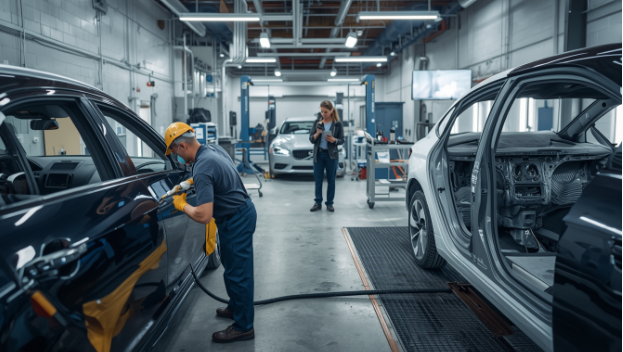
Most people only think about an auto body shop when something goes wrong. A dent, a scratch, or a collision sends them searching for help, often with little idea of what happens after they hand over their keys. What may seem like a straightforward repair is actually a detailed process that requires skill, patience, and precision.
At Breezy Point Auto Body, each day is a mix of hands-on craftsmanship, advanced technology, and problem-solving. For technicians working in an auto body shop in Stratford, no two days are exactly the same. Every vehicle brings a new challenge and a chance to restore it to its best condition.
Starting the Day: Preparation and Planning
The day usually begins early. Before any tools are picked up, technicians review the schedule and assess the vehicles lined up for service.
This initial planning stage includes:
- Reviewing repair orders and customer notes
- Inspecting vehicles that arrived overnight
- Prioritizing tasks based on complexity and deadlines
- Coordinating with team members and service advisors
Clear communication is important at this stage. It ensures everyone understands what needs to be done and how long it may take.
In a busy shop that handles auto body repair in Stratford, CT, staying organized helps keep the workflow smooth and efficient.
The First Inspection: Understanding the Damage
Once a technician begins working on a vehicle, the first step is a detailed inspection. While some damage is visible, other issues may be hidden beneath the surface.
Technicians carefully check:
- Structural components
- Alignment of panels
- Paint damage and underlying material
- Safety systems that may have been affected
Modern vehicles often require vehicle diagnostic scanning to identify issues within electronic systems. This step helps ensure that nothing is overlooked, especially in newer cars equipped with advanced driver assistance features.
According to the National Institute for Automotive Service Excellence, proper diagnostics play a critical role in safe and accurate repairs, particularly as vehicles become more technologically advanced.
Disassembly: Getting to the Root of the Problem
After the inspection, technicians begin disassembling the damaged area. This allows them to fully assess what needs repair or replacement.
This phase involves:
- Removing damaged panels
- Detaching parts to access internal structures
- Labeling and organizing components for reassembly
Careful handling is important to avoid causing additional damage. Every part is tracked to ensure it returns to the correct place later in the process.
Repair and Restoration: Where Skill Matters Most
This is where the real craftsmanship begins. Depending on the damage, technicians may repair existing parts or replace them entirely.
Common repair tasks include:
- Straightening bent metal frames
- Filling dents and smoothing surfaces
- Welding or bonding new components
- Aligning panels for a precise fit
In collision repair work, accuracy is critical. Even small misalignments can affect how a vehicle looks and performs.
Technicians rely on a combination of experience and specialized tools to restore the structure and shape of the vehicle.
Surface Preparation: Setting the Stage for Paint
Before any paint is applied, the surface must be properly prepared. This step ensures that the final finish looks smooth and lasts over time.
Preparation includes:
- Sanding down rough or uneven areas
- Applying primer to create a stable base
- Cleaning surfaces to remove dust and debris
Skipping or rushing this step can lead to visible imperfections, so technicians take their time to get it right.
Paint Matching and Application
One of the most precise parts of the process is matching the vehicle’s original color. Even slight differences can be noticeable.
Technicians often use a computerized auto paint mixing machine to create an exact match. This technology helps replicate the original color using detailed formulas.
The painting process typically involves:
- Applying multiple layers of paint
- Allowing proper drying time between coats
- Adding a clear coat for protection and shine
The goal is to make the repaired area blend seamlessly with the rest of the vehicle.
Reassembly: Putting Everything Back Together
Once the paint has cured, the vehicle moves to the reassembly stage. This is where all previously removed parts are carefully reinstalled.
Technicians ensure that:
- Panels are aligned correctly
- Components are securely attached
- Electrical systems are functioning properly
Attention to detail is key. Every screw, clip, and connection must be in place to ensure the vehicle is safe and complete.
Final Inspection and Quality Check
Before a vehicle is returned to its owner, it goes through a final inspection. This step ensures that all work meets quality and safety standards.
The inspection process includes:
- Checking the finish and paint consistency
- Verifying structural repairs
- Testing systems affected by the repair
- Cleaning and detailing the vehicle
This final review helps ensure that the car not only looks good but also performs as expected.
The Role of Teamwork
An auto body shop is a team environment. Technicians, painters, estimators, and service advisors all play a role in the repair process.
Collaboration helps:
- Keep projects on schedule
- Maintain consistent quality
- Improve communication with customers
At a professional shop like Breezy Point Auto Body in Stratford, CT, teamwork is essential for delivering reliable results.
Challenges Technicians Face
While the work can be rewarding, it also comes with challenges.
Technicians often deal with:
- Tight deadlines and customer expectations
- Complex repairs involving modern technology
- Physical demands of working with tools and materials
- The need to stay updated with industry advancements
Despite these challenges, many technicians take pride in their work. Restoring a damaged vehicle requires both technical skill and creative problem-solving.
Why This Work Matters
Auto body repair is not just about appearance. It plays an important role in safety and functionality.
Proper repairs help:
- Maintain the structural integrity of the vehicle
- Ensure safety systems work correctly
- Preserve the value of the car
According to the National Highway Traffic Safety Administration, correct repairs are essential for maintaining crash safety performance in modern vehicles.
A Craft Built on Precision and Care
A typical day for an auto body technician is anything but routine. From the first inspection to the final polish, every step requires attention to detail and a commitment to quality.
What may look like a simple repair from the outside is actually a carefully managed process involving multiple stages and skilled hands. Each vehicle tells a different story, and technicians play a key role in bringing it back to life.
For anyone who has ever wondered what happens behind the scenes, the answer is clear. It is a blend of craftsmanship, technology, and dedication that turns damage into restoration.
If your vehicle needs expert care or you want to learn more about the repair process, visit https://breezypointautobody.com/ to explore your options and connect with a trusted local team.